
Assuming you’re reading this in Europe, it’s probably fair to say that work today looks very different from how it once did. For most of us, labour is no longer physical but mental, cognitive, and deeply interpersonal. We sit at desks, behind screens, moving information rather than bodies. I don’t think there’s any real way to escape the desk-and-laptop reality; the laptop has simply replaced the pen, paper, and filing cabinet. But as demands increase and efficiency becomes the ultimate goal, it often feels like employee wellbeing is an afterthought.
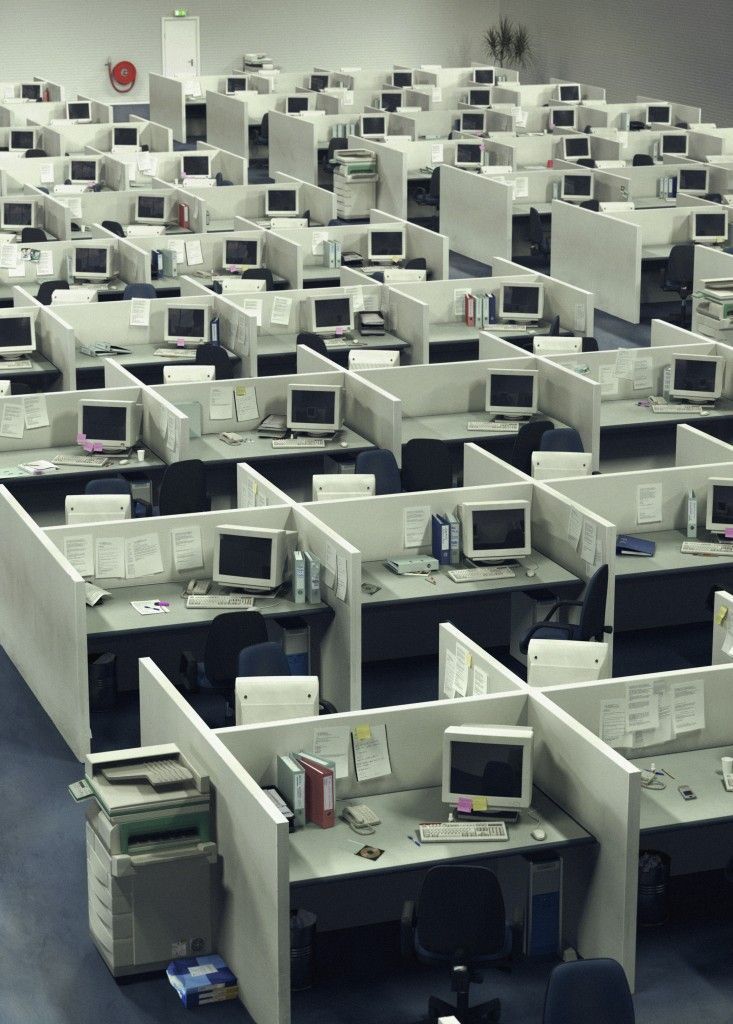
Of course, companies are made up of people, ordinary human beings like you and me. Still, the pressure tends to flow downward from the top, driven by deadlines, productivity targets, and growth. I’ve worked with people who seem to thrive under that pressure. My manager in my first job, for example, appeared to enjoy the stress and believed it made her better at what she did. At the time, I judged her for it. In my head, she was a product of the system, not at fault, exactly, but conditioned to believe that overworking herself made her more respectable. I couldn’t help but feel she was giving too much to a company that offered little in return, beyond a discount and a title. She’s just one example, but she reminds me of many people I’ve worked with.
Alright, maybe that’s a little harsh. The reality is that there are only two real options: work for yourself or work for someone else. And working for yourself is far from easy. After years in a company, most people eventually accept that this is simply how things are. You learn the rules of the office, adopt a kind of quiet stoicism, and make peace with the duties of your role. I haven’t managed to do that. Instead, I’ve grown exhausted and increasingly sceptical of the modern workplace.
So let me set the scene.
I wake up around 8am, shower, get dressed, and head to the tube. It’s rammed. Everyone looks tired. No smiles. Phones are already out — Outlook calendars checked before the day has even begun. Busy, busy, busy. The doors open. We spill onto the platform and rush toward the stairs. Chaos — but organised chaos. We queue for the escalator and silently judge anyone who doesn’t. Another queue at the barriers. It’s 9:05am. We’re all late. Outside now, walking fast. Into the building. Tap the card. Wait for the lift.

Someone from work steps in. Do I say hi?
“Morning.”
No response.
The lift ride is quiet. Doors open. To the desk.
“Morning.”
Ignored again.
Laptop on. First email: ‘Q4 Retention Initiatives’. What does that even mean? Emails pile up. Chasing this. Flagging that. Actions for now. Next steps. I’ll put a catch-up in the calendar.
Is it home time yet?
Nope. It’s only 11:30.
You get the idea. I feel stressed just writing this. And it’s the same every day. I only work two days in the office and three from home, which you’d think would make things easier, but it doesn’t. Not for me.
What really triggers my anxiety is meetings. They never seem to end. There’s always someone questioning, correcting, asserting control. It feels like if you ask someone a question and they can’t answer immediately, you’ve caught them out. Suddenly, you’re the expert and they’re the idiot. Why was this person even hired if they can’t answer on the spot?
In meetings, the anxiety completely takes over. I sit there waiting for a question to be thrown my way. My mind feels like a computer with a hundred tabs open. When the question comes, the system crashes , nothing but a loading screen. My throat goes dry and tight. “Sorry, I’m not sure,” I say quietly. A colleague jumps in to answer. My heart races. I feel stupid. Like I don’t deserve to be there. I stay silent for the rest of the meeting, hyper-aware of my heartbeat thudding in my ears. When it’s over, I almost question whether it even happened. My brain has an impressive ability to erase the experience as soon as it’s over.

This feeling isn’t new. I’ve known it my whole life. At school, I dreaded being picked on. I often zoned out in class and missed what was being taught, so when I was asked a question, I genuinely didn’t know the answer. I’d catch up later, in my own time, at my own pace — and I did well in exams. But unfamiliar situations and being put on the spot triggered intense anxiety, and I never learned how to manage it.
I didn’t know what it was when I was younger and it was only until I started first year of Uni and started having some of the worst anxiety attacks of my life, that I reached out to a GP who labelled it as that. I started taking sertraline, which I must say really helped. I took it for around 8 months and though I was healed for ever. I still felt nervous at times but it manifested itself as mental thoughts rather than physical symptoms. All was great for a while longer until I started my first job after uni. And it all began again. I didn’t go on any medication this time and just rode it out. It went through phases of ups and downs – but mostly downs. Eventually I quit the job and started the one I am currently at and I’m sorry to say it’s still following me.
It took me a long time to realise that my anxiety is, in many ways, an emotional compass. My body is trying to tell me something. The anxiety I experience feels like a response to environments that simply aren’t right for me. Rather than seeing it as something to fight or suppress, I’m learning to listen to it.
I think it’s time we all start paying closer attention to these signals.
We’re often told that the answer is to adapt: to become more resilient, to attend workshops on managing stress, to learn how to cope better within systems that make us unwell in the first place. And while those tools can help, I don’t believe that accepting the workplace as it is, and forcing ourselves to fit, is the only option. Nor do I think the solution is always to stay put and endure, hoping one day it will feel easier.
Sometimes, when something consistently doesn’t feel right, that discomfort isn’t a personal failure or a weakness to be fixed. It’s information. It’s the body communicating long before the mind catches up. Tight chests, racing hearts, mental shutdowns, these aren’t random glitches. They’re signals, quietly (or not so quietly) pointing us away from environments that don’t suit us.

Listening to that doesn’t mean having a perfectly mapped-out alternative. It doesn’t mean quitting impulsively or knowing exactly what comes next. It simply means trusting that your body knows something you haven’t yet put into words. That awareness alone is already movement. It’s already progress.
If it doesn’t feel right, maybe you’re not meant to stay, not forever, not like this. And recognising that is not giving up; it’s tuning in. It’s the first step toward something gentler, something more aligned. Toward work, and a life, that feels less like constant resistance and more like quiet ease.
And in that listening, even before anything changes on the outside, you may find that you’re already one step closer to peace.